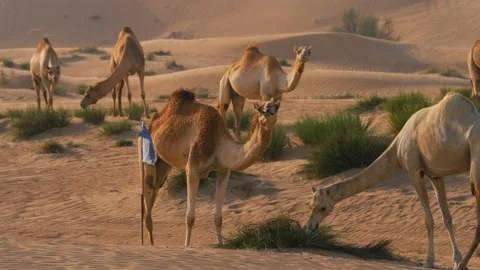
If you're a camel owner, farm manager, or stable operator in the UAE, getting feed quantities right is essential — both for your animals' health and for managing costs. Here's a practical guide based on what actually works in Gulf conditions.
The Short Answer
An adult camel typically eats between 10 and 15 kilograms of hay per day, depending on body weight, activity level, and reproductive stage. For a healthy 500–700 kg adult, this works out to roughly 1.5% to 2.5% of body weight in dry forage daily.
Daily Intake by Camel Type
Not every camel is the same. Here's a more detailed breakdown:
| Camel Profile | Daily Hay Intake | Notes |
|---|---|---|
| Adult resting camel | 8–12 kg | Maintenance level |
| Working / transport camel | 12–15 kg | Higher energy demand |
| Racing camel (training) | 14–18 kg | Often supplemented with concentrates |
| Pregnant camel | 12–15 kg | Increased nutritional needs |
| Lactating camel | 15–20 kg | Highest demand — milk production |
| Young camel (under 2 yrs) | 4–8 kg | Growing, plus mother's milk if calf |
These ranges assume good-quality hay. Poor-quality hay forces camels to eat more for the same nutritional return — which means higher costs and lower performance.
Which Hay Type is Best for UAE Camels?
Two main forages dominate the UAE camel feed market:
Rhodes Grass is the workhorse of camel nutrition in the Gulf. It's well-suited to hot climates, easy for camels to digest, and provides the right fibre profile for healthy rumen function. Most UAE camel farms use Rhodes Grass as the daily base feed.
Alfalfa Hay is richer in protein (around 18–20%) and is typically used for racing camels, lactating mothers, and animals needing extra condition. It's usually fed alongside Rhodes Grass rather than alone.
UAE-Specific Considerations
Owning camels in the UAE comes with environmental factors that affect both feed quantity and quality:
- Summer heat can suppress appetite. During the hottest months, feed in the cooler early morning and late evening hours.
- Water intake matters. A camel can drink 100+ litres after a hot day. Hay must be stored dry — humid storage causes rapid spoilage in coastal areas.
- Dust and quality. Premium camels — especially racing animals — need low-dust hay to protect respiratory health. Always check bales for mould, off colours, or excessive dust before feeding.
- Bulk storage in raised, ventilated areas helps maintain quality through UAE's humid summer months.
How to Estimate Your Monthly Hay Needs
A simple rule of thumb for budgeting:
Camels × Average daily intake (kg) × 30 days = Monthly hay requirement
For example, a small farm with 10 adult resting camels eating an average of 12 kg per day needs approximately 3,600 kg (3.6 tonnes) of hay per month. Most UAE farms order in containerised lots to lock in pricing and ensure consistent supply.
Quality is Where the Savings Are
Cheap hay is rarely a saving. Poor-quality forage means higher consumption, lower body condition, and avoidable vet costs. A reliable supplier — one who can provide consistent batches, proper documentation, and on-time delivery — pays for itself.
At Zawiah, we supply premium Rhodes Grass and Alfalfa Hay to camel farms, racing stables, and breeding programmes across the UAE. Every batch is sourced for consistency, tested for moisture and protein, and delivered direct to your yard.
Need premium hay for your camels?
Talk to our team today — bulk and small farm orders welcome.